
"chemical tube lighting"
110 article(s) found

Coffee equipment brief review and coffee making exchange of small Fuji 200 coffee roaster use evaluation
Professional barista exchanges, please pay attention to coffee workshop (Weixin Official Accounts cafe_style) The so-called coffee roasting is actually to fry the raw seeds of coffee fruits. Therefore, there are various roasting methods, but some have better effects, some have poor effects, some are suitable for shallow roasting, and some are suitable for deep roasting. For example, many people should know the origin of coffee.

Philips espresso machine instruction manual Philips coffee machine operation method diagram
Professional coffee knowledge exchange more coffee bean information please follow the coffee workshop (Wechat official account cafe_style) General description (figure 1) 1 Control Panel 2 Vapor Diagram 3 Control Button 4 Coffee Bean Icon 5 Italian Coffee Button 6 General Coffee Button 7 Hot Water display 8 scale removal indicator 9 warning Light 10 2 Cup indicator 11 Water Tank empty indicator 12 switch with indicator

Coffee bean varieties: the historical cause and classification of cocoa bean varieties are explained in detail.
Morphological characteristics of the trunk: up to 12 meters high, trees, wide branches, branchlets brown pubescent. The trunk is solid and the cacao trunk has a luxuriant crown. Leaves: alternate, elliptic, leathery, 20-30 cm long, slightly stellate hairy on veins. Flowers: old cauline flowers, blooming directly on the trunk or main branch, about 1.8 cm in diameter; Calyx pink, smelly. 5 deep cracks; petals 5, lower sunken helmets

Boutique Coffee about Espresso Coffee
ESPRESSO COFFEE: the first basic concept of Professional Techniques- (Ⅰ) is to build a knowledge structure-just a bunch of facts, just a bunch of facts. Theory is the skeleton of fact. The past experience of teaching others to cook espresso has taught me one thing: if you start teaching, tell the newcomer Guan
How do I register for the Q-grader exam?
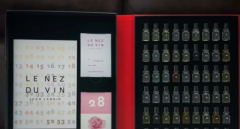
Signing up for the Q-grader exam to evaluate raw coffee beans through people's senses is a very subjective thing. For example, coffee that you think is deeply roasted may be moderately roasted to me, or you think it is the flavor of berry jam, which is more like balsamic vinegar to me. Now there are more than 4000 Q grader,Q-grading systems around the world.
How to pass the Q-grader exam (1) Taste skill smell bottle 36 Flavor Spectrum sensory training
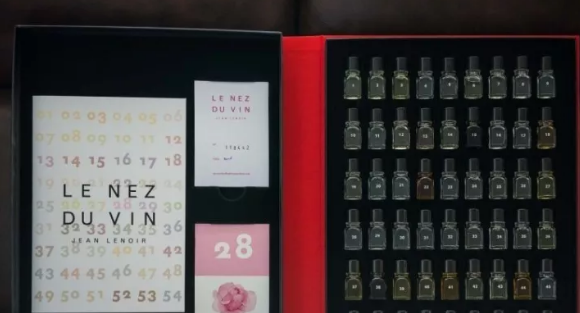
Signing up for the Q-grader exam to evaluate raw coffee beans through people's senses is a very subjective thing. For example, coffee that you think is deeply roasted may be moderately roasted to me, or you think it is the flavor of berry jam, which is more like balsamic vinegar to me. Now there are more than 4000 Q grader,Q-grading systems around the world.

What is the intermediate barista SCA barista certificate? I sort out the somewhat abnormal intermediate barista exam.
On the last question yesterday [I sorted out the examination questions for intermediate baristas (part 1), 99% chose D, most people will think of lavazza's painting style, and one fan analyzed: the painting is the smile of the Mona Lisa, it is well known that Leonardo da Vinci is Italian, and only lavazza is an Italian brand.
A brief introduction to the introduction to Coffee roasting, the complete Book of Coffee self-baking
When the author published the first edition of this book in 1996, roasting coffee beans at home was something that only tireless coffee addicts would do. At that time, roasting coffee beans was a very difficult thing to master, and roasters had to work hard to find a way to roast coffee beans to a moderate brown. Today, individuals still roast coffee beans at home.
The introduction to coffee roasting recommends the complete Book of Coffee self-baking.
When the author published the first edition of this book in 1996, roasting coffee beans at home was something that only tireless coffee addicts would do. At that time, roasting coffee beans was a very difficult thing to master, and roasters had to work hard to find a way to roast coffee beans to a moderate brown. Today, individuals still roast coffee beans at home.
Comprehensive knowledge of boutique coffee
Coffee distribution: coffee trees grow in the tropical or subtropical regions of the tropical or subtropical regions with the equator as the center and between the latitudes of 25 degrees south and north. At present, coffee is produced in more than 60 countries, widely distributed in South America, Central America, the West Indies, Asia, Africa, Arabia, the South Pacific and Oceania. In terms of output, Brazil, which accounts for the largest output in the world, is about